
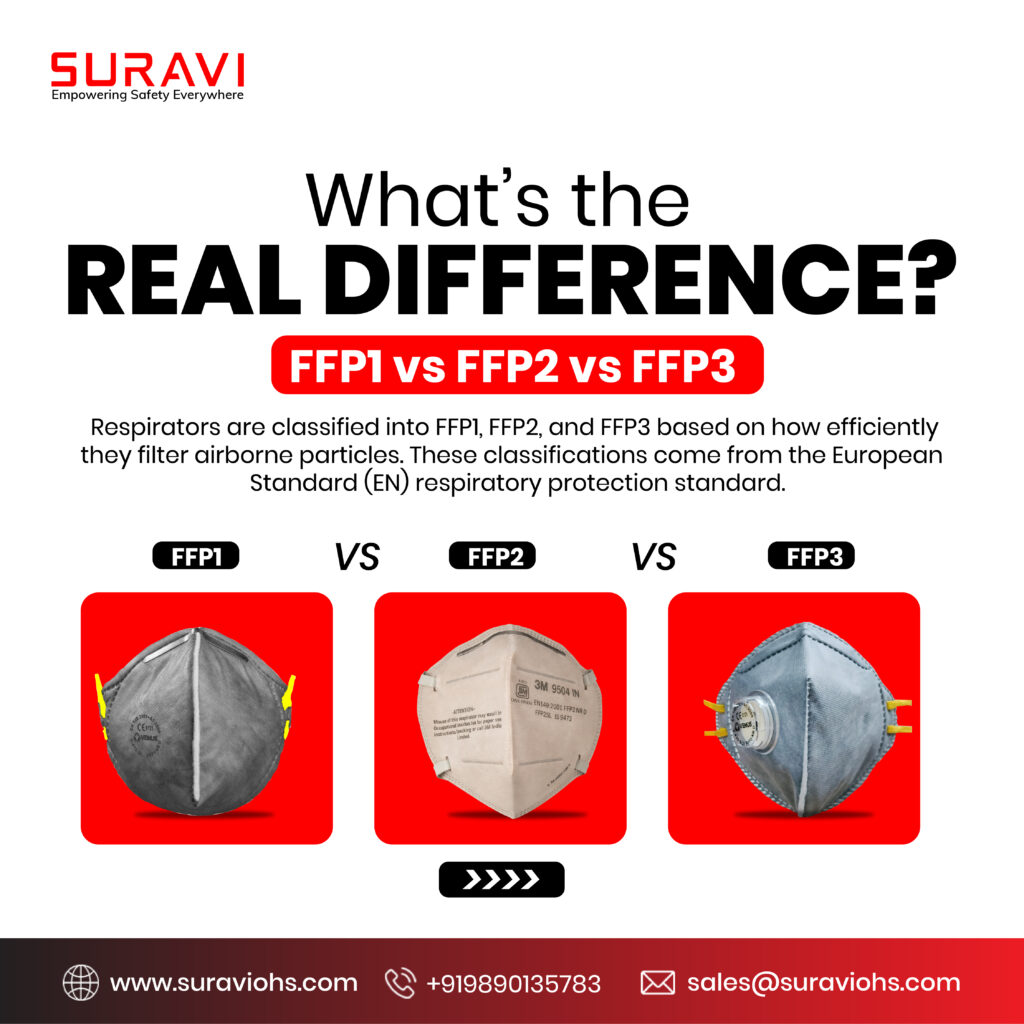
When it comes to workplace safety, “one size fits all” doesn’t apply to respiratory protection. Whether you are dealing with basic construction dust or high-risk chemical vapors, choosing the right mask is critical for long-term health.
Our guide breaks down the European Standard (EN) FFP Mask Classification to help you select the perfect level of protection for your environment.
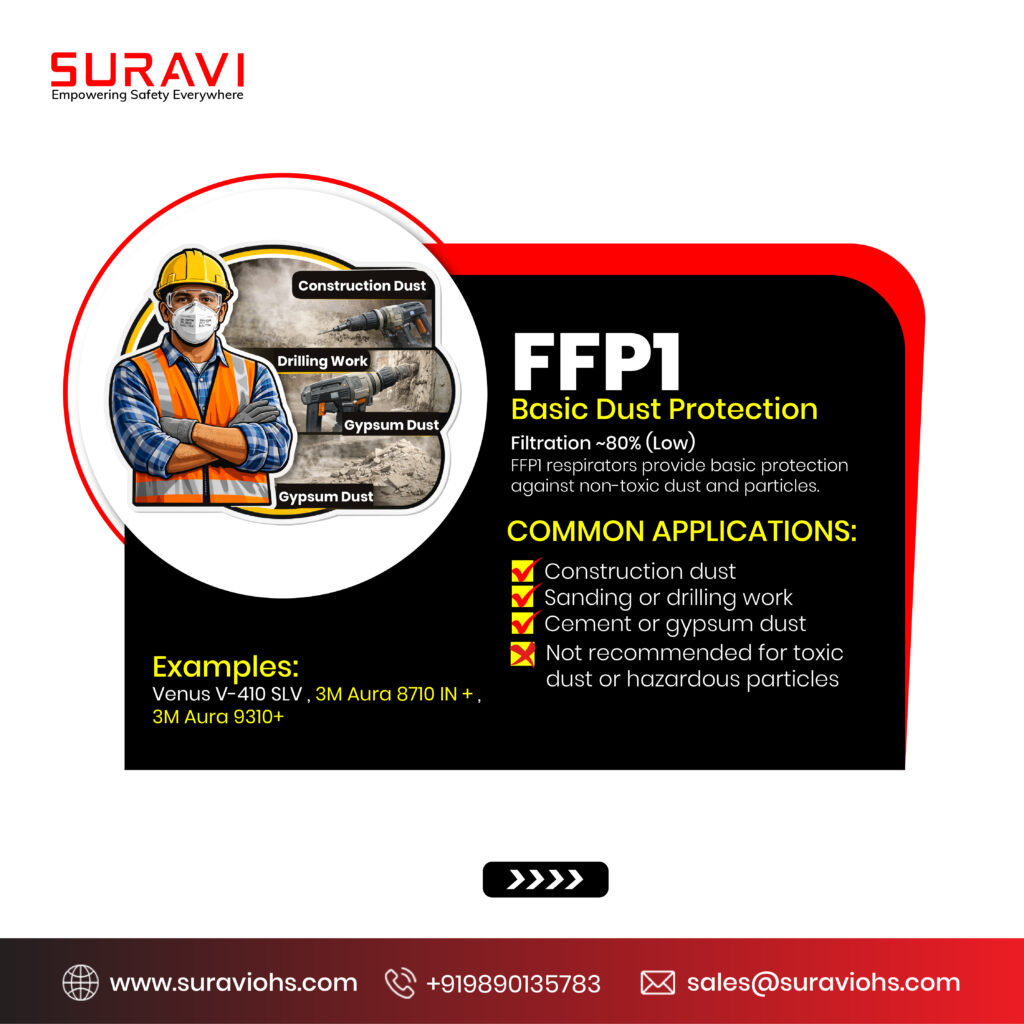
FFP Mask Classification 1st is FFP1 masks are the entry-level standard for respiratory protection. They are designed to filter out non-toxic, coarse particles that can irritate the airways but don’t pose a long-term health threat.
- Filtration Efficiency: ~80% (Low)
- Ideal For: Construction dust, sanding, drilling, and handling cement or gypsum.
- Common Models: Venus V-410 SLV, 3M Aura 8710 IN+, 3M Aura 9310+.
- Note: Not recommended for toxic dust or hazardous airborne particles.
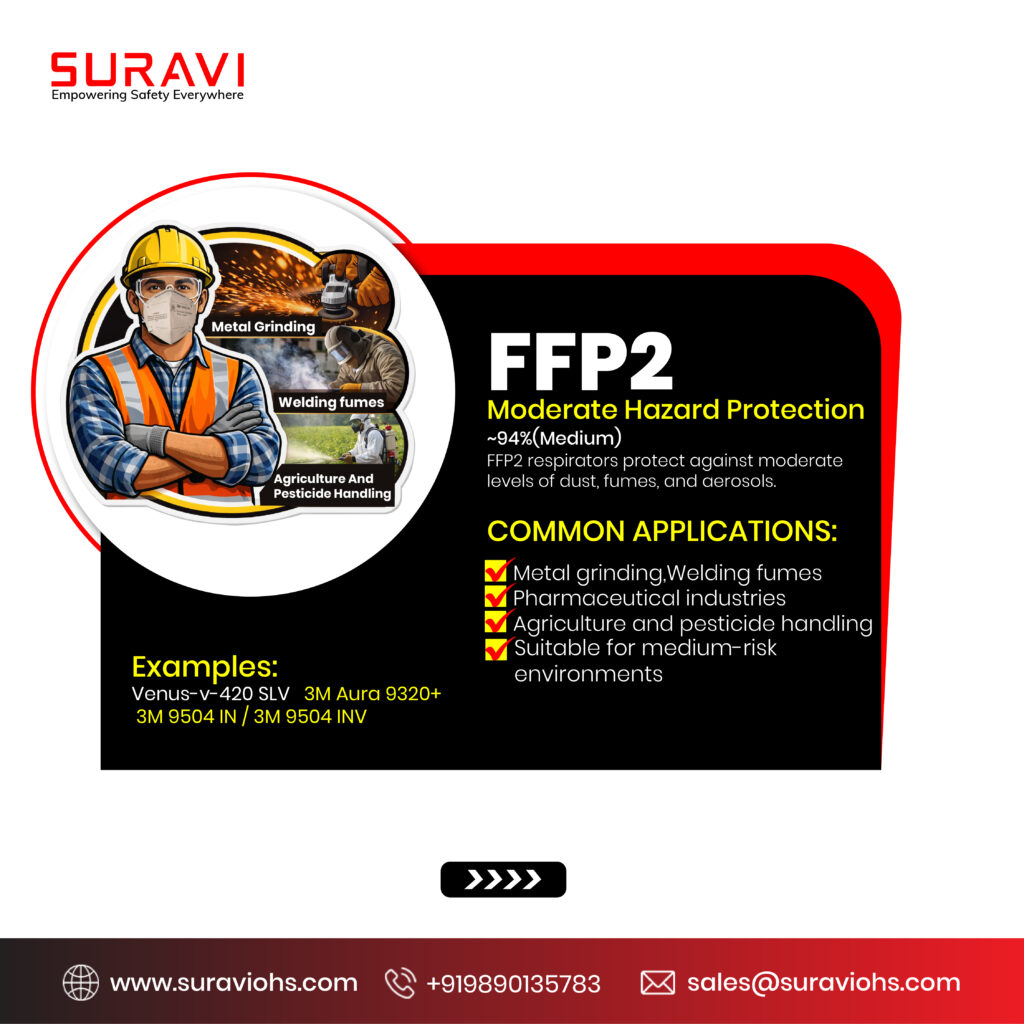
FFP Mask Classification 2nd is FFP2 respirators offer a significant step up in safety, filtering out moderate levels of dust, as well as liquid and solid aerosols. These are the “workhorse” masks of the industrial world.
- Filtration Efficiency: ~94% (Medium)
- Ideal For: Metal grinding, welding fumes, pharmaceutical industries, and handling agricultural pesticides.
- Common Models: Venus V-420 SLV, 3M Aura 9320+, 3M 9504 IN.
- Suitability: Designed for medium-risk environments where fine dust and fumes are present.
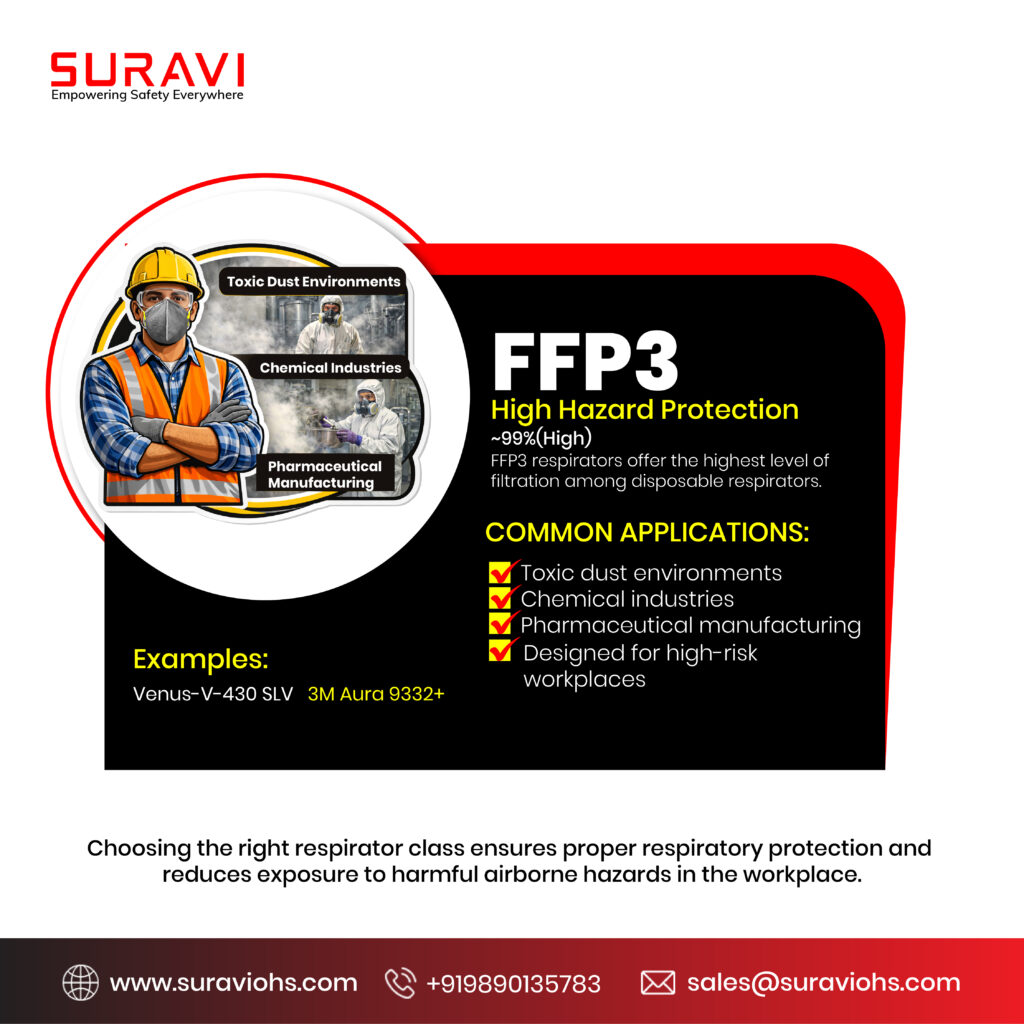
FFP Mask Classification 3rd is FFP3 respirators provide the highest level of filtration available in a disposable mask. They are essential for protecting against very fine, highly toxic particles that can be absorbed into the bloodstream or cause severe lung damage.
- Filtration Efficiency: ~99% (High)
- Ideal For: Toxic dust environments, chemical industries, and high-precision pharmaceutical manufacturing.
- Common Models: Venus V-430 SLV, 3M Aura 9332+.
- Maximum Safety: Specifically engineered for high-risk workplaces where air quality is compromised by hazardous substances.
Why Choosing the Right Class Matters
Selecting the correct FFP Mask Classification is about more than just compliance—it’s about your health. Using an FFP1 mask in a toxic chemical environment leaves you exposed, while using an FFP3 for simple sawdust might be unnecessary for the task.
Need expert advice? Contact our safety specialists today at
Website: www.suraviohs.com
Phone: +91 9890135783
Email: sales@suraviohs.com