
When selecting cut-resistant gloves, understanding global safety standards is critical. Two of the most widely used standards are ANSI/ISEA 105 (USA) and EN 388 (Europe). While both measure cut resistance, they differ in testing methods, rating systems, and scope.
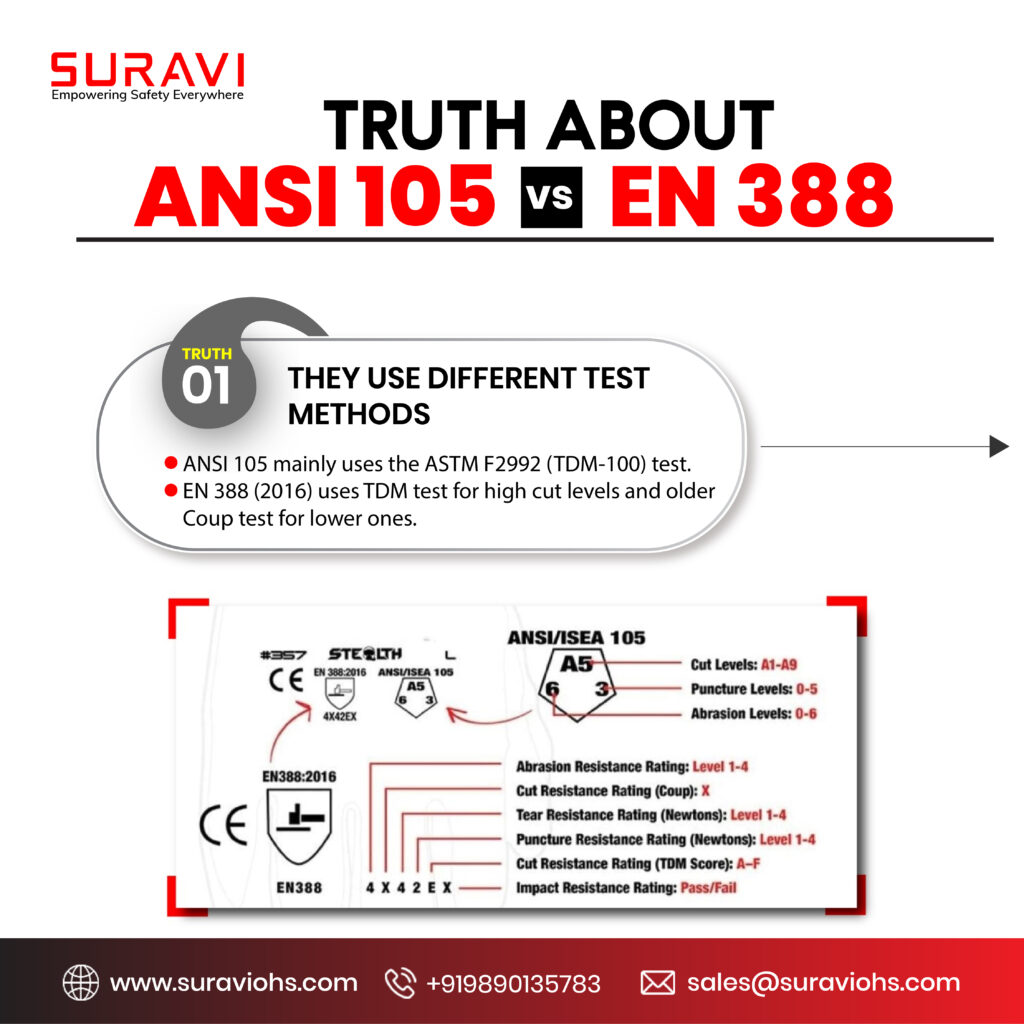
1. Different Test Methods
ANSI and EN standards use different approaches to measure cut resistance:
- ANSI 105 primarily uses the ASTM F2992 (TDM-100) test, which measures the force required to cut through the material.
- EN 388 (2016) uses:
- TDM test for high cut resistance levels
- Coup test for lower cut levels
👉 This difference means results are not directly interchangeable.
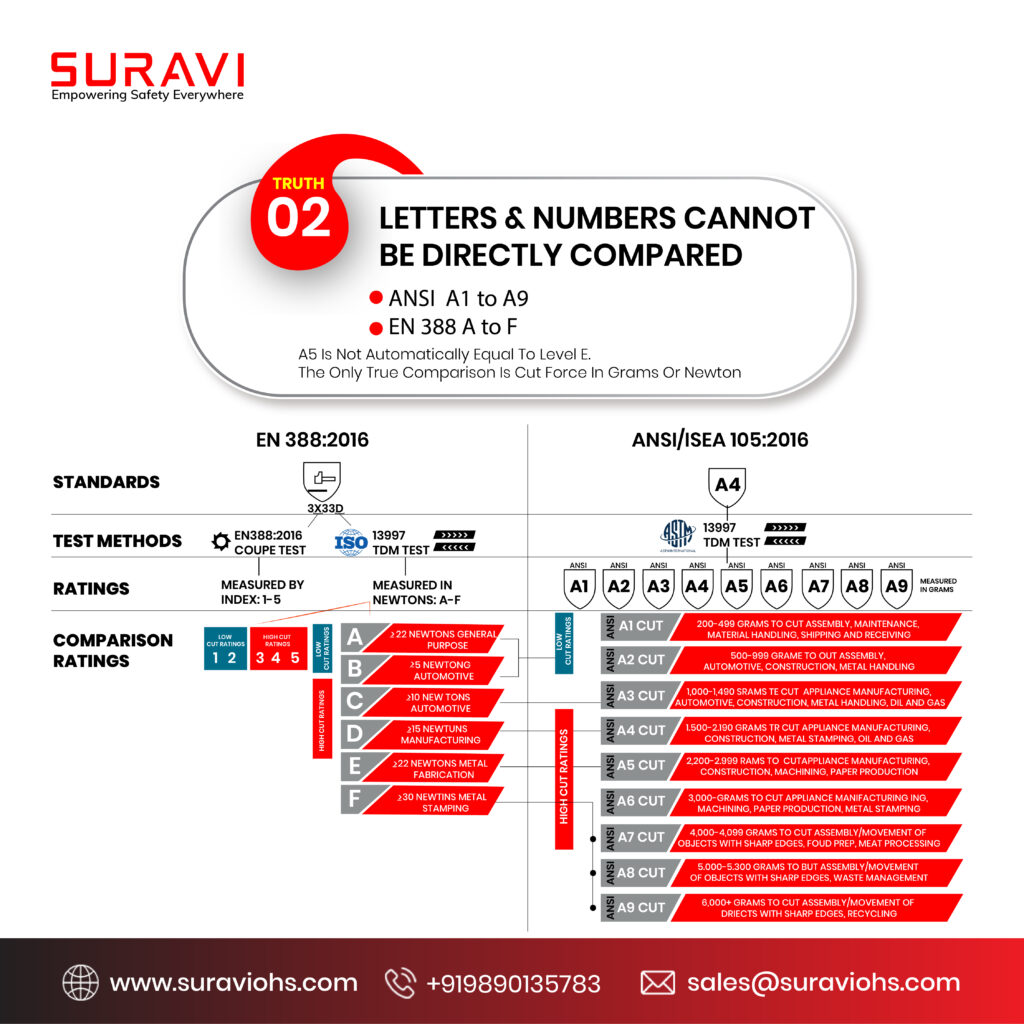
2. Rating Systems Are Not Directly Comparable
The grading systems used in both standards differ:
- ANSI 105: Levels range from A1 to A9
- EN 388: Levels range from A to F
Important Note:
An ANSI A5 rating is NOT equal to EN Level E.
The only accurate comparison is based on cut resistance force (grams or Newtons), not the label.
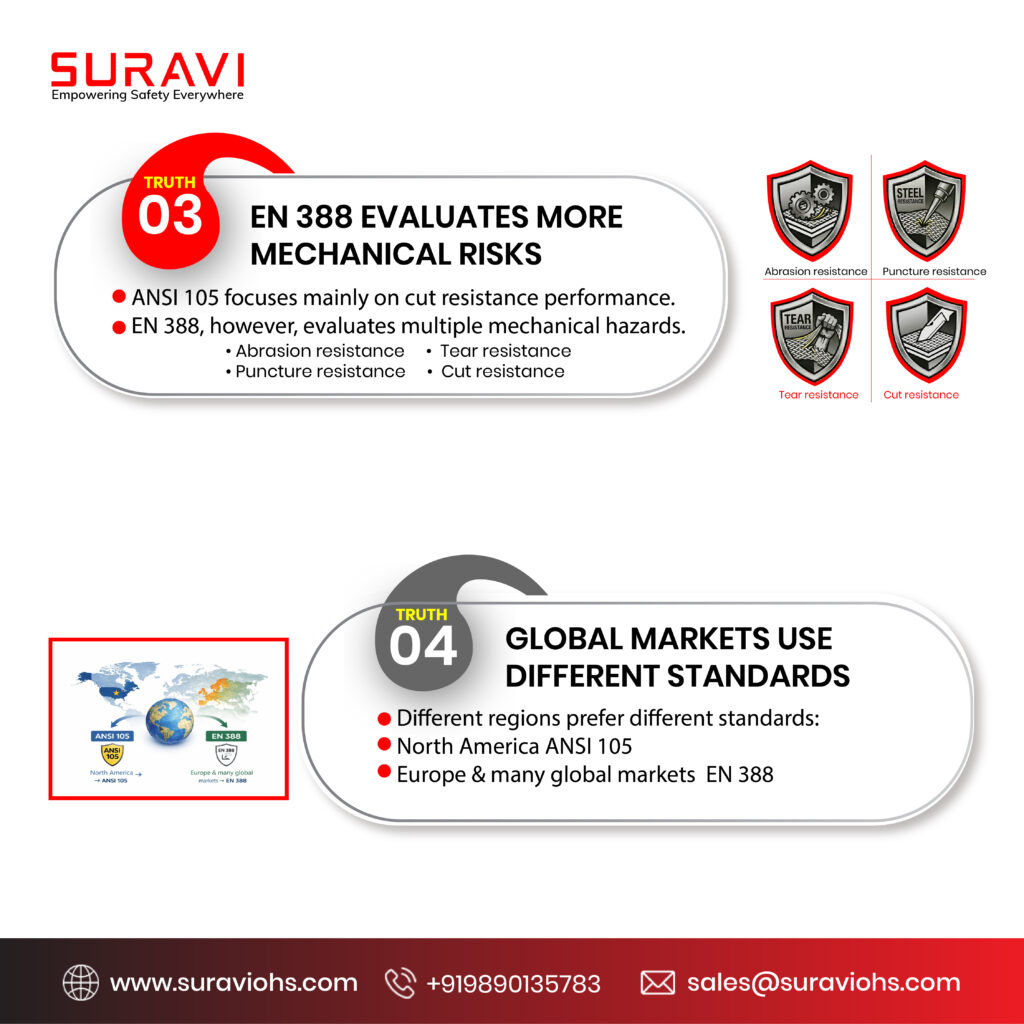
3. EN 388 Covers More Mechanical Risks
While ANSI focuses mainly on cut resistance, EN 388 evaluates multiple hazards:
- Abrasion resistance
- Cut resistance
- Tear resistance
- Puncture resistance
👉 This makes EN 388 more comprehensive for overall mechanical protection.
4. Global Usage of Standards
Different regions follow different standards:
- North America → ANSI 105
- Europe & Global Markets → EN 388
👉 Choosing the right standard depends on your industry, location, and compliance requirements.
Both ANSI 105 and EN 388 are essential safety benchmarks—but they serve different purposes. Instead of comparing ratings directly, focus on actual cut resistance values and application needs to select the right protective gloves.
Need help selecting the right cut-resistant gloves for your industry?
Suravi Innovates Pvt. Ltd. provides certified PPE solutions tailored to your safety requirements.
Contact us today to ensure the right protection for your workforce.
🌐 Website:www.suraviohs.com
📧 Email:sales@suraviohs.com
📱 Phone: +91 98901 35783