Why every worker need Workplace Protection?
On many job sites, there is a moment just before work begins.
A worker adjusts their safety vest.
Someone checks their gloves.
Another picks up a helmet, holds it for a second, and then puts it on.
That simple action may look routine, but it carries deep meaning.
Holding a helmet is not just about being ready to work.
It is about choosing protection.
It is about caring enough to stay safe.
In every industrial environment — construction sites, factories, warehouses, plants, and infrastructure projects — every role deserves protection.
Safety Is Not Just for “High-Risk” Jobs
There is a common misconception in industrial workplaces:
“Only certain jobs are dangerous.”
In reality, risk does not respect job titles.
Whether someone is:
- A site engineer
- A machine operator
- A supervisor
- A technician
- A warehouse worker
- A visitor or contractor
Hazards exist for everyone.
Slippery floors, falling objects, moving equipment, dust, and noise do not discriminate. Safety should not either.
That is why protection must be universal — for every role, at every level.
The Meaning Behind Personal Protective Equipment (PPE)
Personal Protective Equipment (PPE) is often seen as just “gear.”
But PPE is more than helmets, shoes, or masks.
It represents:
- Care for human life
- Responsibility from employers
- Awareness among workers
- Commitment to safe operations
When a worker wears PPE correctly, they are not just following rules — they are trusting the system built to protect them.
And when a company provides quality industrial safety gear, it sends a powerful message:
“Your safety matters here.”
The Helmet: A Symbol of Responsibility
The helmet is one of the most recognizable safety symbols on any site.
But its importance goes far beyond appearance also with workplace protection.
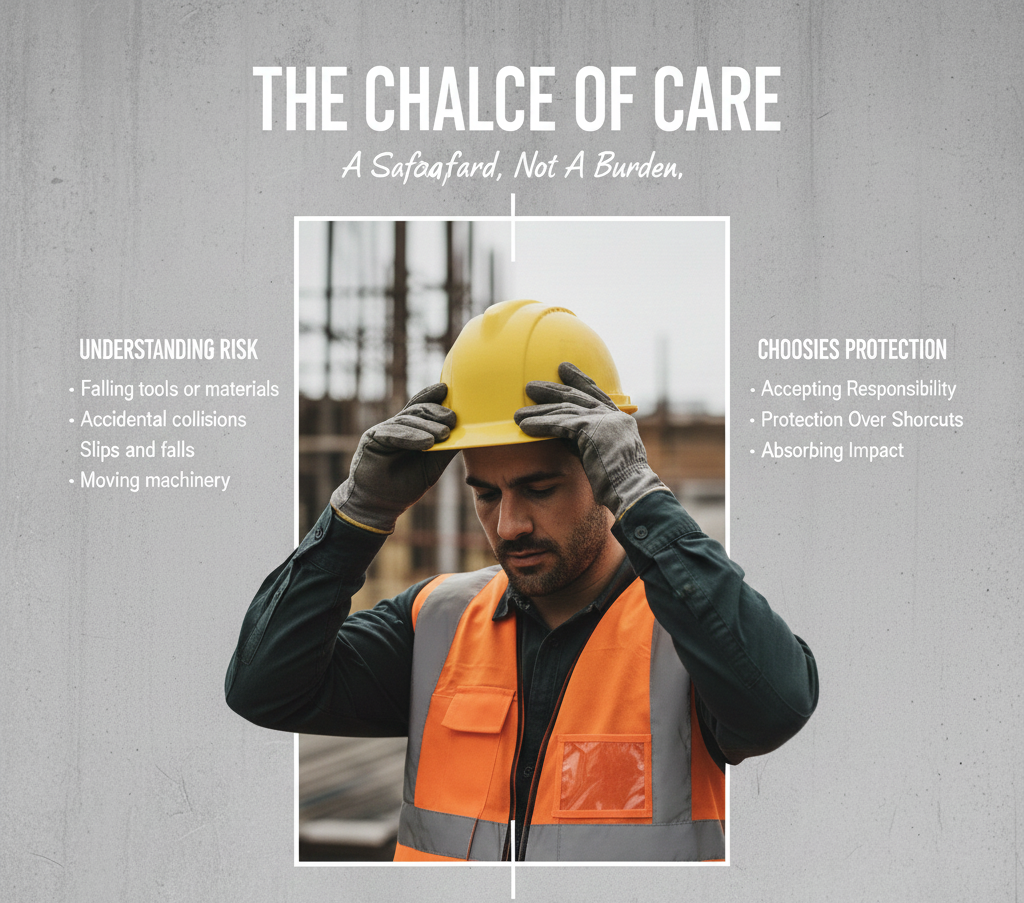
In busy industrial environments, head injuries can occur due to:
- Falling tools or materials
- Accidental collisions
- Slips and falls
- Moving machinery
A safety helmet absorbs impact and reduces the severity of injuries that could otherwise be fatal.
Holding a helmet means:
- Understanding risk
- Accepting responsibility
- Choosing protection over shortcuts
A helmet is not a burden — it is a safeguard.
Safety Is About What Happens Before an Accident
Many people talk about safety only after something goes wrong they don’t understand why workplace protection is needed.
True safety thinking works the opposite way.
It focuses on:
- Identifying hazards early
- Wearing the right PPE
- Following safe work practices
- Communicating clearly
Most workplace accidents are preventable. They happen not because protection is unavailable, but because it is ignored, misunderstood, or underestimated.
Safety is not reactive.
Safety is preventive.
Every Role Has Different Risks — But Equal Value
A machine operator may face mechanical hazards.
A welder may face heat and fumes.
A supervisor may face moving vehicles and site-wide risks.
A warehouse worker may face slips and falling loads.
The risks are different — but the value of life is the same.
This is why workplace safety cannot be selective.
Protection should be:
- Role-specific
- Environment-appropriate
- Comfortable for long hours
- Certified and reliable
When PPE matches real working conditions, workers are more likely to wear it consistently.
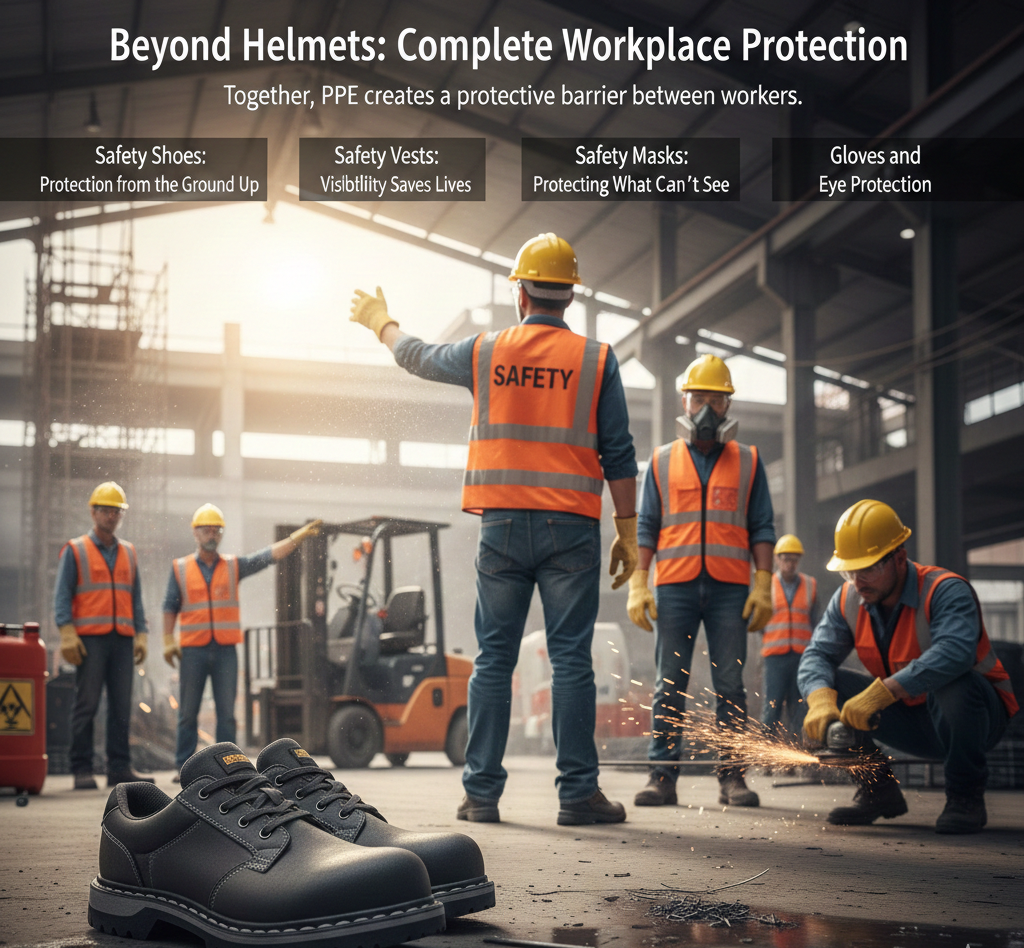
Beyond Helmets: Complete Workplace Protection
Safety does not rely on a single piece of equipment. It is a system.
Safety Shoes: Protection from the Ground Up
Foot injuries are among the most common workplace incidents. Industrial safety shoes protect against:
- Falling objects
- Slippery surfaces
- Sharp materials
- Electrical hazards
Anti-slip soles and toe protection make a significant difference during long shifts.
Safety Vests: Visibility Saves Lives
High-visibility safety vests reduce the risk of accidents involving vehicles and heavy equipment. Being seen clearly is often the simplest form of protection.
Safety Masks: Protecting What You Can’t See
Dust, fumes, and chemical particles cause long-term health damage. Safety masks and respirators protect workers from invisible dangers that accumulate over time.
Gloves and Eye Protection
Hands and eyes are exposed constantly. Proper gloves and eye protection prevent cuts, burns, and vision damage.
Together, PPE creates a protective barrier between workers and workplace hazards.
For more information please visit: https://suraviohs.com/venus-g-102-safety-goggles/