
When selecting safety gloves for industrial work, understanding the EN 388 standard is essential. This international standard helps users identify how well a glove protects against common mechanical hazards.
Choosing the right glove based on EN 388 ratings ensures better protection, improved safety compliance, and reduced workplace injuries.
What is EN 388?
EN 388 is a European safety standard used to evaluate mechanical protection gloves. It measures a glove’s resistance against four major risks commonly faced in industrial environments.
These risks include:
- Abrasion Resistance – Protection against surface wear caused by rubbing or friction.
- Cut Resistance – Protection against cuts from sharp objects like metal edges or glass.
- Tear Resistance – Ability of the glove material to resist tearing under tension.
- Puncture Resistance – Protection against penetration from sharp or pointed objects.
These ratings help safety professionals select the right gloves for specific work conditions.
How to Read the EN 388 Code:-
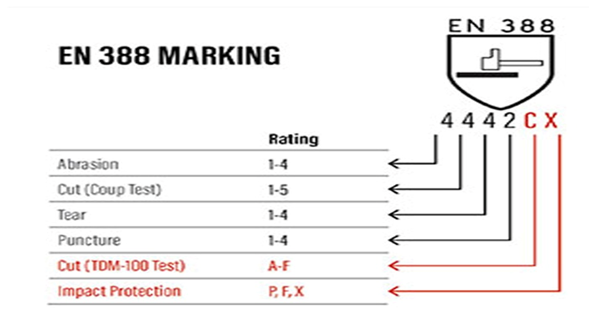
EN 388 Rating Levels
| Protection Test | Rating Scale | Description |
|---|---|---|
| Abrasion Resistance | 1 – 4 | Measures how well the glove resists surface wear caused by rubbing or friction. |
| Cut Resistance (Coup Test) | 1 – 5 | Indicates protection against cuts from sharp objects. |
| Tear Resistance | 1 – 4 | Shows how resistant the glove material is to tearing when pulled. |
| Puncture Resistance | 1 – 4 | Measures protection against sharp objects piercing the glove. |
| Cut Resistance (TDM-100 Test) | A – F | Advanced cut resistance test for high-performance gloves. |
| Impact Protection | P, F, X | Indicates whether the glove provides additional impact protection. |
Why Understanding EN 388 Matters?
Many workers choose gloves based only on comfort or price. However, ignoring the EN 388 rating can lead to serious safety risks.
- Choosing lower protection may increase the risk of injuries.
- Choosing higher protection than required may reduce comfort, flexibility, and dexterity.
That’s why understanding these ratings helps ensure both safety and productivity.
Right Glove = Right Application
Selecting the right glove depends on the specific hazards in your work environment. For example:
- Metal handling requires high cut resistance.
- Rough material handling requires strong abrasion resistance.
- Sharp tools require good puncture protection.
Matching the glove rating with the job requirement helps create a safer and more efficient workplace.
Need Help Choosing the Right Safety Gloves?
Our safety experts at Suravi Innovates can help you select the right gloves based on your industry and application.
🌐 www.suraviohs.com
📞 +91 9890135783
📧 sales@suraviohs.com